
Atari 2600, the only video game console that has wood grain printed on it. The Atari 2600 or Atari VCS (Video Computer System) was Atari’s golden child. With the 2600 Atari felt that they were unstoppable in the new video game market they have established. Although rightfully so, every console Atari made after the 2600 could not compete with the numbers that the VCS brought. Now how did the 2600 come to be?
 Although not the first video game console, it was the first to popularize the new industry. Atari started off with it’s Pong arcade machine which debuted on November 29 1972. It faced great success and started a trend of home Pong consoles. This was during a time in which semiconductors, chips and rom (Read-Only Memory) were on the rise which meant that a console or computer can be built with less cost and much smaller. With all of this Atari released the 2600 in 1977 with a price tag of $199. What made the 2600 different from the pong consoles was that the console could play different games other than pong with cartridges that have roms on it. Arcades were also on the rise which was perfect since many at the time would love to play these games at home and the VCS offered that. Many arcade hits, like Space Invaders and Asteroid, were released on the system causing the system to sell very well and gross $2 billion dollars in 1980. This would last long since the relatively new market had no quality control or any control at the point, so in 1983 the decline of video game sales and interest would prompt the video game crash of 1983 to occured due to influx and over saturation of other video game consoles from other companies, like the Odyssey 2 or Colecovision, and plethora of horrible made games such as Chase the Chuck Wagon and the Atari 2600 version of Pacman. This cause Atari to lose money and even though they tried to gain interest with the Atari 5200 and the 7800 it was too late. It wouldn’t be until 1985 in which Nintendo would bring back the interest of video games to the United States with their Nintendo Entertainment System (NES).
 Although very primitive compared with video games now, the Atari 2600 graphics were pretty advanced for the time in which it was released, compared to the Pong consoles it competed against. It had a 1.19mhz processor, 128 bytes of ram, and was able to display at a resolution of 160 x 192 pixels on screen. Now a modern calculator can outperform that and then some, but even with these limitations there were still some graphically and complex games that came out for the system. On the console there is 6 switches: one powers the system on, the other changes the screen to black and white or color, the two in the middle control the difficulty of the game for either of the two players, the other switch controls the different game modes in the game, and the last switch reset the game. The 2600 has two controller ports on the back with controllers that just have one button and a joystick. In the middle of the 2600 there is a place to insert the cartridge.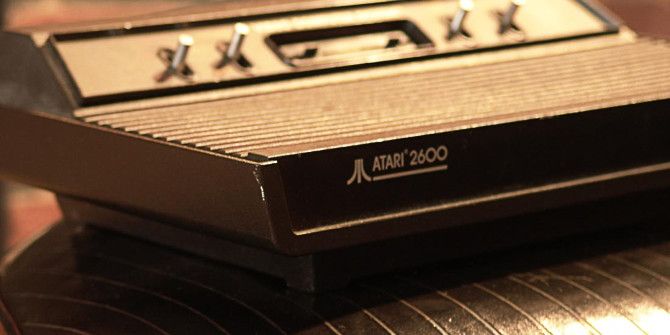
It has been a great pleasure typing out these blogs and I would like to say thank you for those who read and comment on my blogs it was much appreciated. Thank you!
source:https://en.wikipedia.org/wiki/Atari_2600
https://en.wikipedia.org/wiki/Atari_2600_hardware

This was a great way to conclude the vast world of obscure technology. It is true, Atari was a very addicting gaming console, helping it revolutionize the gaming enterprise. I feel that it is very important to be aware of past pieces of technology (though we laugh at them nowadays), so that we take advantage of the flaws of previous generations and work to better enhance our civilization. Don't give up exploring the old world of innovation, because as we all know, the past dictates what happens in the future.
ReplyDeleteI believe that this was a great last blog to post about. I always thought that the Atari 2600 was something unique compared to other consoles because how this was the beginning of something much bigger in the future. I believe this can be applied to life as well because of how we are the representation of the Atari by starting out brand new, not knowing that one day we just might change the world some day. This I believe is something that we should keep in our minds, to encourage ourselves to do great things in life after high school. Great blog!
ReplyDeleteI Like Atari but I like Jose more.
ReplyDelete