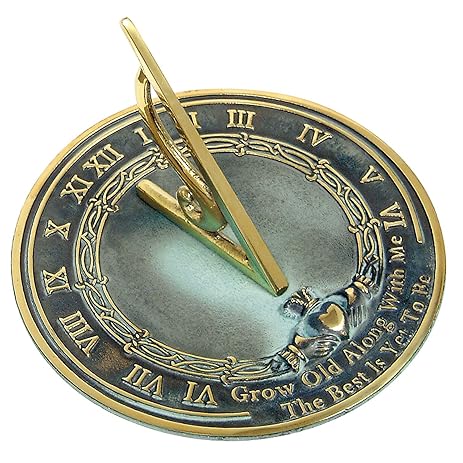
 Sundial, the only device not to work in the dark after solar panels. Sundials are quite the important leap for man because it was the first time in human history that we are able to tell and manage time. There simple yet effective design (only if there was sunlight of course) provided a way for early humans to keep up a schedule for the work throughout the day. Without this invention, life as we know it could be completely out of sync.
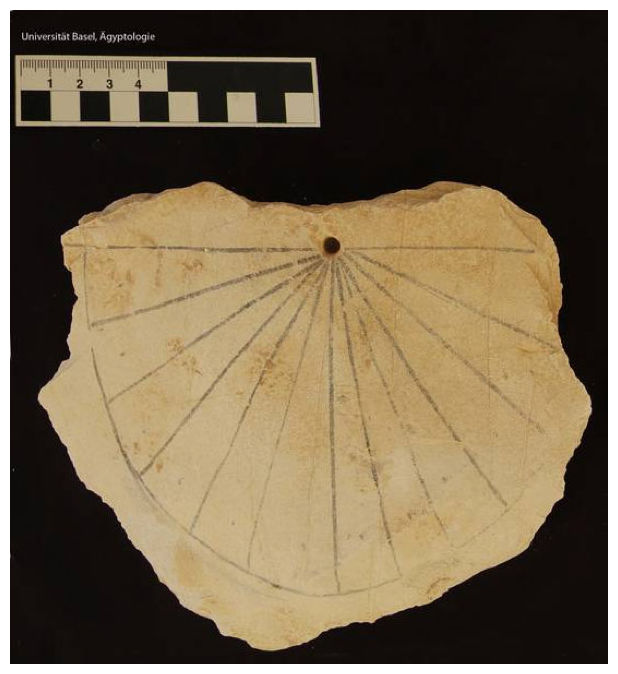
The history of sundial and time it self start with, like everything, in Egypt. Their sundial was a stick or pillar that they would stick in the ground and told time of the length of the shadow. The Egyptians also created another form of the sundial which was a t-shape. This sundial had 5 hours were written on the stick and would be set up two way, one in the morning with the stick facing east, then west when afternoon came along. The Greeks created a sundial which was called “pelekinon”. This sundial was different because it is closer to the sundial that many of us are familiar with. It used the circular face with a gnomon in the middle. This allow the shadow to line up with the markings on the face allowing more accurate time.
 Even though sundials seem simple in design, there is a lot more to a sundial than sticking a stick in the ground and calling it a day. As the sun moves it shines on a gnomon which casts a shadow on the face of the clock. Well you may ask, what else is there to a sundial? There is the Earth’s axis to take in consideration and the position of the sun, which changes daily. There are multiple ways to fix this issue. One way with a normal horizontal sundial is to have the base steady and change the gnomon depending on the changes of the Earth’s axis. Another way has to deal with aligning the latitude with the platform and the gnomon has to be perpendicular. The set up of the sundials varies from location.
Sundials are interesting devices that helped us manage our time wisely. It is the grandfather of the grandfather clock and without our lives would most definitely would never be the same.
FUNFACT: The first portable sundial was called Rigou and was invented in China
source:http://www.yalescientific.org/2008/11/how-do-sundials-work/
https://www.timecenter.com/articles/when-time-began-the-history-and-science-of-sundials/

Really interesting blog this week. But yo yo yo, who planted a tree next to that sundial behind the library? Or worse yet, what genius built a sundial under a tree?
ReplyDeleteFirst off, I just have to say that I loved your concluding sentence. I found it to be very punny. Anyways, I love reading your blogs because I always just ponder how it was that people came up with the idea to make such creations and your blogs allow me to figure some of that out.
ReplyDeleteGreat blog this week! I’m sure this is one of the more well known pieces of obscure technology, but I find it fascinating nonetheless. I always see these whenever I go to a plant/bonsai nursery and I suppose they are now sought after for their aesthetic appeal in gardens.
ReplyDelete